Blog
Crawler Crane vs Mobile Crane: Which Is Right for Your UAE Project?
Crawler or mobile crane for your UAE site? Compare ground stability, setup time, capacity, and transport costs to pick the right rig.
If your site has soft, uneven, or reclaimed ground and the crane will sit in one spot for an extended lift program, a crawler crane is usually the right call. If your project needs the crane to move between multiple positions on paved or compacted ground, a mobile crane will get you there faster and at lower cost. Everything else, from capacity at radius to transport logistics, follows from that basic split.
This is a decision planners in the UAE face constantly, because the country’s mix of reclaimed coastal land, desert sites, and dense urban plots creates real variation in ground conditions from one project to the next. Choosing the wrong crane type does not just cost money. It can delay a schedule by days while a replacement unit is sourced and mobilized.
Key Takeaways
- Choose a crawler crane for soft or reclaimed ground, long-duration lifts from a fixed position, and heavy capacity at short to moderate radius.
- Choose a mobile crane when the job requires moving between multiple lift points in the same day or across a large site footprint.
- Crawler cranes cost more to mobilize because they typically arrive disassembled on multiple trailers and are reassembled on site; mobile cranes drive in largely road-ready.
- For most urban high-rise and infrastructure work in the UAE, a mobile crane’s speed and flexibility win; for industrial plant and heavy foundation work, a crawler crane’s stability wins.
Ground Conditions Decide More Than Anything Else
A crane’s ground bearing pressure determines whether it can work safely without sinking, shifting, or requiring extensive matting. Crawler cranes distribute their weight across long tracks, which lowers ground pressure per square meter compared with a mobile crane sitting on outriggers with a much smaller footprint. That difference matters most on soft or reclaimed land, which is common along the UAE coastline and on newly developed industrial plots where fill material has not fully consolidated.
On these sites, a mobile crane often needs extensive crane mats, compacted pads, or engineered ground improvement before it can set up safely. A crawler crane can frequently work directly on the native or partially compacted surface, or with lighter matting, because its track system spreads the load. That reduces both preparation time and the risk of an outrigger punching through the surface mid-lift, which is a genuine safety hazard on reclaimed ground.
Setup Time and Site Mobility Work in Opposite Directions
Mobile cranes are built for speed. A crane on a self-propelled carrier can drive to a lift point, extend outriggers, and be rigging within an hour or two in many cases. That responsiveness is valuable on sites where the lift location changes daily, such as multi-building residential developments or road and bridge projects with lift points spread across a long corridor.
Crawler cranes trade that speed for stability. Larger crawler units, including capacity classes well above what a single trailer can carry, arrive in sections and are assembled on site with the help of an assist crane. That process can take a full day or more before the first lift happens. Once assembled, though, a crawler crane can often travel short distances across the site on its own tracks without breaking down, which is useful for sequential lifts within a confined plant or yard area.
The practical rule: if the job is one long lift campaign from a fixed or near-fixed position, the crawler’s slower setup is a one-time cost that pays off. If the job needs the crane at ten different points over two weeks, that same setup time repeated at each stop makes a mobile crane far more economical.
Capacity at Radius: Where Crawlers Pull Ahead
Lift capacity is never a single number. It changes with boom length and working radius, and this is where the two crane types diverge most clearly. Crawler cranes generally hold more capacity at longer radii because their wide track base and heavier counterweight configurations resist tipping more effectively than an outrigger-supported mobile crane of similar nominal tonnage.
For heavy picks close to the crane, such as setting large vessels, structural steel modules, or precast elements in an industrial plant, a crawler crane’s load chart typically offers more usable capacity at the radius the lift actually requires. Mobile cranes remain highly capable and, on many UAE projects with moderate loads and good access, are entirely sufficient. The gap becomes significant mainly on the heaviest picks or when the load must be set at radius rather than directly overhead.
how to choose the right crane tonnage
For a full breakdown of how to match tonnage and boom configuration to a specific lift, see our guide on how to choose the right crane tonnage.
Transport and Mobilization Costs
Cost differences between the two crane types start well before the first lift. A mobile crane, particularly in the small to mid-capacity range, drives to site under its own power or with minimal escort requirements. Larger mobile cranes may need counterweight trucks and permits, but the crane itself typically arrives assembled or close to it.
Crawler cranes rarely travel intact. The upper works, counterweights, track assemblies, and boom sections usually move on separate low-bed trailers, and reassembly on site requires an assist crane and a rigging crew. That process adds transport trips, crew hours, and time before productive work begins, which is reflected in the mobilization line of a crawler crane rental quote. On a short-duration job, that mobilization cost can outweigh the crawler’s operational advantages. On a longer campaign, it is usually a small fraction of the total project cost.
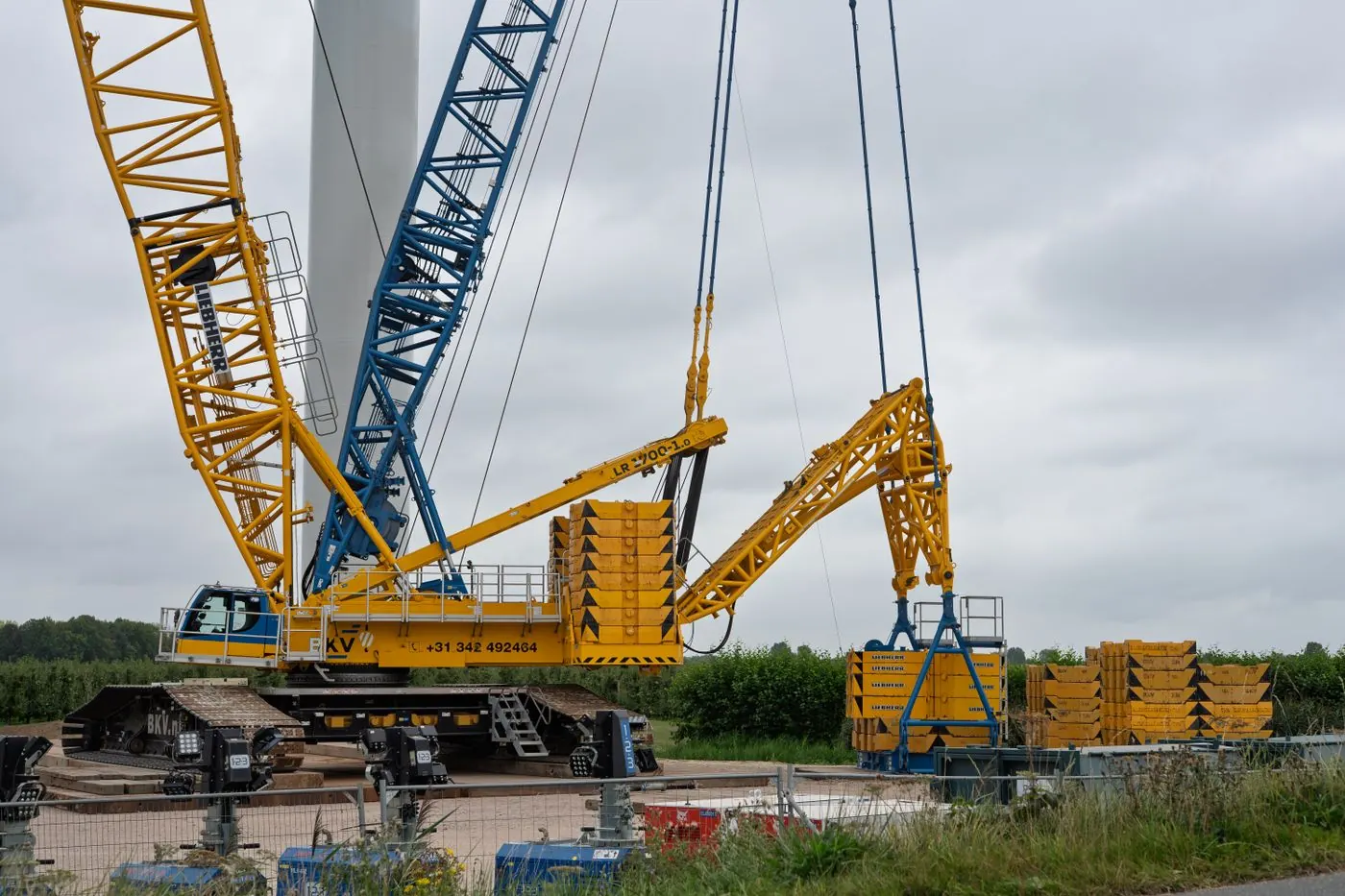
Liebherr LTR1100 crawler crane
Red Tiger Cranes operates a Liebherr LTR1100 crawler crane rated at 100 tonnes alongside a mobile crane fleet ranging from 8 to 500 tonnes, which lets planners compare both options against the same project scope before committing.
UAE Project Examples
Industrial plant work. A refinery turnaround or plant expansion often involves heavy vessel lifts on ground that has been backfilled or built up over years of construction traffic. The combination of heavy capacity requirements and uncertain soil bearing makes a crawler crane the more reliable choice, especially when the crane will stay in one lay-down or erection zone for the duration of the shutdown.
Urban high-rise construction. City-center tower projects usually sit on confirmed, engineered slabs or compacted pads, and the crane’s job is often tower crane assembly, precast panel installation, or MEP equipment placement at height rather than sustained heavy picks. Site access is tight, and the crane may need to reposition as the building rises. A mobile crane’s smaller footprint and faster repositioning generally fit these constraints better than a crawler.
Infrastructure and bridge work. Road and bridge projects spread lift points over long distances, sometimes kilometers apart, with each location needing only a few hours of crane time before moving to the next. Trucking a mobile crane between locations is far more practical than disassembling and reassembling a crawler crane at every stop, even though ground conditions along some corridors, such as areas near sabkha or low-lying coastal terrain, can favor a crawler’s stability when the crane does need to sit still for a longer pour or beam-set sequence.
FAQ
Can a crawler crane work on any UAE ground condition without matting?
Not always. Very soft or saturated ground, including some reclaimed coastal sites, may still need matting or ground improvement even for a crawler crane. The crawler reduces the risk and the amount of preparation needed compared with a mobile crane, but a site-specific ground bearing assessment should confirm what is required before mobilization.
Is a crawler crane always more expensive to rent than a mobile crane of the same capacity?
The rental rate itself is often comparable at similar tonnage, but total project cost usually favors mobile cranes on short jobs because of lower mobilization and demobilization costs. Crawler cranes become more cost-competitive on longer campaigns where the fixed setup cost is spread across more working days.
Can a mobile crane be used on reclaimed land in the UAE?
Yes, with the right preparation. Engineered ground improvement, compacted pads, or heavy-duty crane mats can allow a mobile crane to work safely on many reclaimed sites. Whether that preparation is more cost-effective than switching to a crawler crane depends on the load, the outrigger footprint, and how long the crane needs to remain in that location.
How do I decide which crane type fits my project without guessing?
Share your site’s ground condition report, lift radius, load weights, and how many lift positions the job requires with your crane provider. Our team can review those details and recommend a crawler or mobile crane based on the actual lift plan rather than a general rule of thumb.
Choosing the Right Crane for Your Site
The choice between a crawler crane and a mobile crane comes down to ground conditions, how often the crane needs to move, and the capacity required at the actual working radius, not brand preference or habit. Get those three factors right and the rest of the lift plan, from mobilization cost to schedule, tends to fall into place.
Mobile Crane vs Crawler Crane pillar guide
For a broader comparison of crane types across all capacity ranges, see our pillar guide, Mobile Crane vs Crawler Crane.
Browse our full equipment fleet to compare available crawler and mobile crane units, or contact our team with your site details for a specific recommendation.

Faizan Ahmed
Related Articles
All articles Blog
Blog Crane Rental for Ports and Logistics Operations in the UAE
Mobile crane rental for UAE ports and logistics: breakbulk cargo, warehouse installs, and free zone lifts that complement fixed port…
Read article Blog
Blog Daily vs Weekly vs Monthly Crane Rental Rates: Which Is Cheaper?
Compare daily, weekly, and monthly crane rental rates in the UAE, including mobilisation costs, to find the true cheapest option…
Read article Blog
Blog Crane and Rigging Support for Hospitality and Hotel Construction Projects
How hotel and resort builds in the UAE use crane rental for facade, MEP, pool, and waterfront lifts without slowing…
Read articleReady to Discuss Your Project?
Share your load, location and dates. Our team responds to every enquiry within 2 hours.