Blog
Crane Rental for Infrastructure and Road Projects Across the Emirates
Infrastructure crane rental in the UAE: bridge beams, pipelines, precast segments, RTA permits, night work, and multi-emirate logistics.
Infrastructure crane rental in the UAE means lifting on a schedule dictated by traffic, not by the project team alone. Bridge beams, precast segments, and buried pipeline sections all have to move into place around live lanes, government permits, and time windows that often only open at night. Getting this right requires a fleet with the right capacity for the lift, an approvals process that matches each emirate’s requirements, and a crew that can plan around road closures instead of against them.
Red Tiger Cranes has supported infrastructure and roads contractors across the UAE since 2008, working within RTA and municipal permit frameworks on projects ranging from routine utility lifts to emergency bridge repairs.
Key Takeaways
– Infrastructure lifts (bridge beams, precast segments, pipeline sections) typically require higher-capacity mobile cranes and tightly sequenced rigging plans.
– Working near live roads adds a layer of permits, traffic management plans, and often night work windows that standard building projects don’t face.
– Emergency infrastructure repairs (damaged bridge beams, failed utility crossings) call for rapid-response crane mobilization, sometimes within hours.
– Multi-emirate projects need a rental partner that already holds the certifications and permit relationships across jurisdictions, not one starting from scratch in each emirate.
Typical Infrastructure Lifting Scenarios
Infrastructure and road projects generate a narrower but heavier set of lifting tasks than most commercial construction work. The components are engineered, precast, and often delivered on a fixed schedule that the crane operation has to match.
Bridge Beam Placement
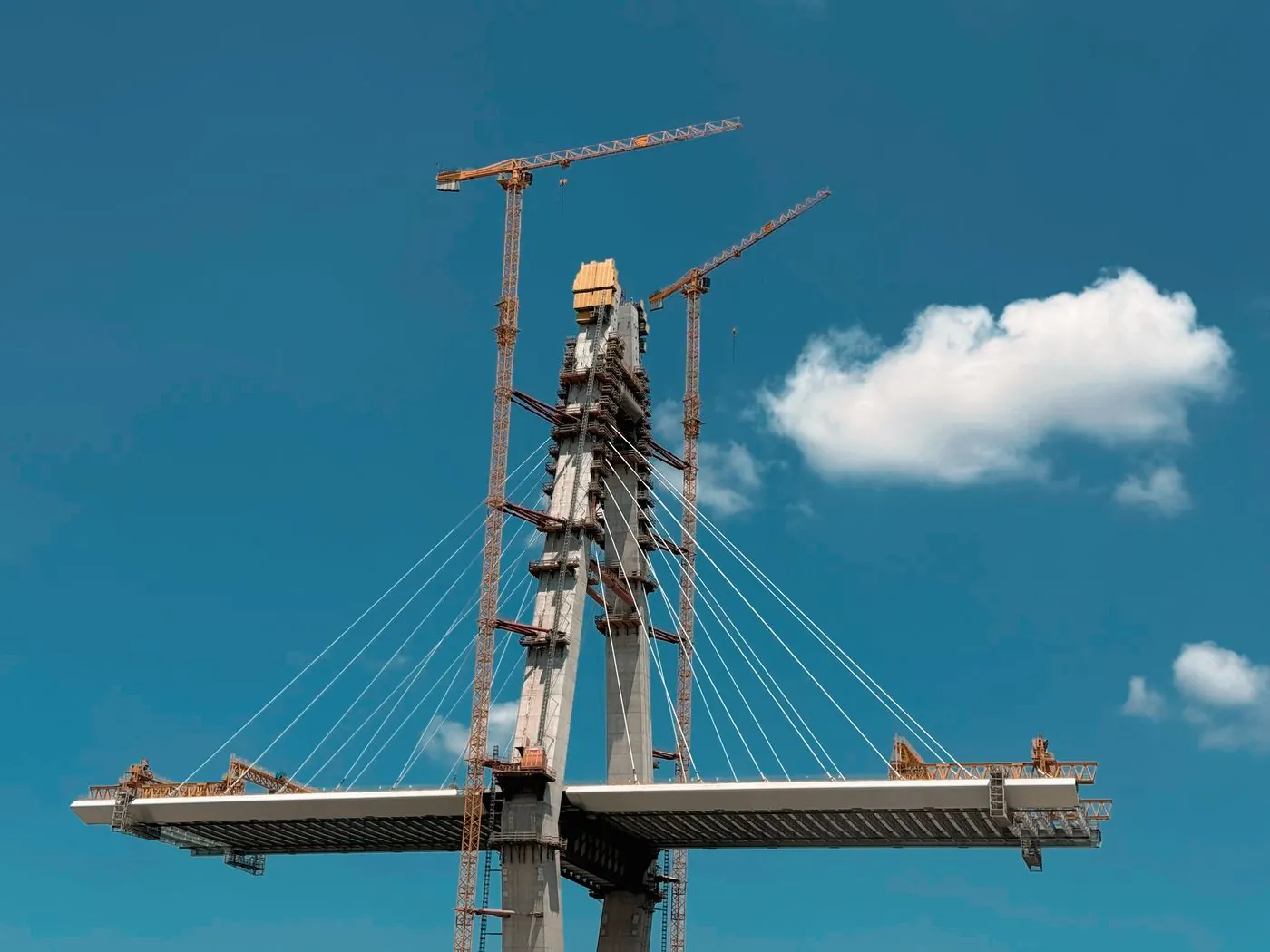
Bridge beam installation is one of the most demanding lifts in the infrastructure sector. Precast concrete or steel girders can weigh well beyond what a standard mobile crane handles, and they typically need to be lifted from a delivery trailer, swung over an active or partially closed roadway, and set onto bearing pads with tight tolerances. The lift plan has to account for beam length, wind exposure at height, and the crane’s positioning relative to any adjacent live traffic lanes.
Utility and Pipeline Work
Water, sewage, and drainage infrastructure projects involve lowering large-diameter pipe sections, manhole units, and pump station components into excavated trenches. These lifts are often constrained by a narrow trench footprint, nearby underground services, and limited working space for outriggers. A crane operator working on pipeline sections needs accurate ground-bearing data before setup, since roadside verges and reinstated fill rarely offer the same load capacity as compacted engineered ground.
Road Structure Elements
Overpasses, retaining walls, sound barriers, and gantry signage all require cranes at various points in the construction sequence, from foundation and pile cap work through to installing precast wall panels and steel structures above traffic. Each of these has its own rigging requirements, and the crane selection depends on reach, radius, and the ground conditions along the road corridor.
Precast Segment Installation
Many UAE road projects, including elevated interchanges and segmental bridge decks, use precast concrete segments assembled on site. This work is sequential: one segment has to be placed and secured before the next lift can begin, which puts pressure on crane scheduling and crew coordination to avoid downtime between lifts.
infrastructure and roads sector page
Working On or Near Live Roads
Infrastructure lifting rarely happens in isolation from traffic. Even a single-lane closure changes the entire planning process, and that’s the part of the job that separates infrastructure crane rental from standard construction lifting.
RTA Permits and Approvals
Any crane operation affecting a public road in Dubai requires approval through the Roads and Transport Authority, and equivalent municipal or Department of Municipalities and Transport processes apply in Abu Dhabi and the other emirates. These approvals typically cover crane positioning, lane closure extent, working hours, and safety barrier requirements. Permit lead times vary by scope, so infrastructure contractors need a rental partner who understands what documentation each authority expects and can prepare lift plans that meet those standards the first time.
Traffic Management Plans
Every roadside lift needs a traffic management plan that details lane closures, diversion routes, signage, and the sequence in which the crane will occupy the work area. The crane provider’s role here goes beyond just showing up with the right machine. Positioning has to account for swept path, outrigger footprint, and clearance from moving traffic, all while keeping the crew and public safe.
Night Work Windows
Many road-related lifts in the UAE happen overnight to reduce disruption to daytime traffic volumes, particularly on major arterial roads and highways. Night work brings its own considerations: lighting for safe rigging and signaling, coordination with the client’s night shift supervision, and tighter turnaround expectations since the closure window is often limited to a few hours before the road has to reopen. A crane crew experienced in night infrastructure work plans the rigging sequence in advance so the actual lift happens quickly once the lane closure is in effect.
Emergency and Rapid-Response Infrastructure Repair
Not every infrastructure lift is scheduled months in advance. Vehicle strikes on bridge structures, utility failures beneath a roadway, or storm damage to road infrastructure can require a crane on site within hours rather than days.
Rapid-response infrastructure work depends on having cranes and rigging equipment already available in the region, along with operators who can assess an unplanned lift on arrival. A damaged bridge beam, for example, may need to be removed safely before a permanent repair can even begin, and that removal lift often happens under time pressure with a road partially or fully closed to traffic.
Abu Dhabi road infrastructure emergency bridge beam project
Coordinating With Government and Semi-Government Clients
Infrastructure projects in the UAE are frequently delivered for RTA, municipalities, ADQ-linked entities, and other government or semi-government bodies, either directly or through main contractors. These clients typically require crane operators and rental companies to hold specific certifications and safety accreditations before mobilizing on site.
Certification and Compliance
Working on public infrastructure projects generally means demonstrating compliance with OSHAD/ADOSH-SF requirements in Abu Dhabi, Dubai Municipality standards, or Trakhees approvals depending on the jurisdiction and project location. LEEA-trained lifting supervision adds another layer of assurance that rigging plans meet recognized lifting equipment standards. Government clients and their main contractors usually verify these credentials before a crane is approved for mobilization, so having them in place ahead of time avoids delays at the permit stage.
Multi-Emirate Project Logistics
Road and infrastructure programs often span more than one emirate, or a contractor may be delivering similar work in Dubai, Abu Dhabi, and Sharjah at the same time. Moving cranes between emirates involves separate permit and registration considerations in each jurisdiction, and a rental provider with established relationships and documentation across the UAE can mobilize equipment with less administrative friction than a company managing each emirate as a first-time process.
Coordinating logistics across multiple sites also means matching crane class to each project’s specific lift requirements rather than defaulting to the largest available unit. Matching capacity to the actual load and radius keeps costs proportional to the job and keeps site mobilization straightforward.
crane rental sizing considerations for road projects
Frequently Asked Questions
What size crane is needed for bridge beam placement?
It depends on beam weight, length, and the lift radius from the crane’s set position to the bearing pad. Infrastructure beam lifts commonly require mobile cranes in the higher capacity ranges of the fleet, and the exact class should be confirmed through a site-specific lift plan rather than assumed from beam weight alone.
How far in advance should we book a crane for RTA-permitted road work?
Permit processing time varies by emirate and by the scope of the lane closure, so it’s best to start the crane and permit planning process as early as possible once the lift date and closure window are known. Lifts tied to fixed road closure schedules benefit from early coordination between the crane provider and the contractor’s traffic management team.
Can cranes mobilize for emergency infrastructure repairs on short notice?
Yes, rapid-response mobilization is possible when equipment is already based in the region and the crane provider has established relationships with local authorities for expedited access. Response times depend on crane availability, site accessibility, and whether emergency permit provisions apply to the specific road authority.
Do infrastructure crane operators need special certification for road work?
Operators working on or near live roads typically need to meet the certification standards required by the relevant authority, such as OSHAD/ADOSH-SF in Abu Dhabi or Dubai Municipality requirements, along with LEEA-aligned lifting supervision for the rigging plan itself.
Next Steps for Infrastructure Project Planning
Infrastructure and road crane work carries a different set of requirements than typical building construction: heavier engineered lifts, permit-driven scheduling, and coordination with government and semi-government stakeholders across one or more emirates. Planning the crane operation alongside the permit and traffic management process, rather than as a separate task, keeps projects moving on schedule.
For a look at how crane requirements differ across sectors beyond infrastructure and roads, see Which Industries Need Crane Rental in the UAE?. To discuss crane requirements for an upcoming road or infrastructure lift, contact Red Tiger Cranes.

Faizan Ahmed
Related Articles
All articles Blog
Crane Rental for Ports and Logistics Operations in the UAE
Mobile crane rental for UAE ports and logistics: breakbulk cargo, warehouse installs, and free zone lifts that complement fixed port…
Read article Blog
Daily vs Weekly vs Monthly Crane Rental Rates: Which Is Cheaper?
Compare daily, weekly, and monthly crane rental rates in the UAE, including mobilisation costs, to find the true cheapest option…
Read article Blog
Crane and Rigging Support for Hospitality and Hotel Construction Projects
How hotel and resort builds in the UAE use crane rental for facade, MEP, pool, and waterfront lifts without slowing…
Read articleReady to Discuss Your Project?
Share your load, location and dates. Our team responds to every enquiry within 2 hours.