
Blog
Mobile Crane vs Crawler Crane: The Complete UAE Guide to Types, Capacity, and Selection
Mobile crane vs crawler crane in the UAE: compare mobility, setup time, capacity, and cost to choose the right crane type for your project.
Choosing between a mobile crane and a crawler crane comes down to one question: does your project need speed and road mobility, or does it need maximum stability and lifting capacity on soft or uneven ground? Mobile cranes travel on wheels, set up fast, and suit most road-accessible UAE job sites. Crawler cranes move on tracks, distribute weight over a wider footprint, and handle the heaviest lifts without outriggers. The right answer depends on your site conditions, load weight, boom reach, and schedule, not on which crane looks more powerful on paper.
This guide breaks down what separates these two crane categories, walks through the subtypes UAE contractors rent most often, and gives you a practical framework for deciding which one your next lift actually needs.
Key Takeaways
– Mobile cranes (all-terrain, rough-terrain, truck-mounted, carry deck) drive on public roads under their own power or with minimal disassembly, and they set up in under an hour on firm, prepared ground.
– Crawler cranes run on tracks, spread ground pressure over a much larger area, and can lift near their full rated capacity without outriggers, which makes them the default choice for very heavy or long-duration lifts on soft or congested sites.
– Capacity ceiling favors crawlers: mobile crane fleets in the UAE commonly range from 8 to 500+ tonnes, while crawler cranes are typically deployed for the upper end of that range and beyond, especially where stability and duty-cycle lifting matter.
– Setup time and mobilization favor mobile cranes: they can reach a site, rig, and start lifting in a fraction of the time a crawler needs, since crawlers often require partial disassembly and low-bed transport.
– Ground conditions decide it for you on many sites: soft soil, uneven terrain, or a lack of space for outrigger spread usually rules out a mobile crane and points to a crawler instead.
What Is a Mobile Crane?
A mobile crane is a crane mounted on rubber tires that can travel to a job site, either on its own wheels or towed on a trailer, then set up using hydraulic outriggers for stability. This category covers most of the cranes a UAE contractor rents for building construction, plant maintenance, and infrastructure work, and it includes several distinct subtypes suited to different site conditions.
All-terrain cranes combine highway travel speed with genuine off-road capability, making them the most versatile mobile crane subtype. They ride on multi-axle chassis with all-wheel steering and drive, so they can move between sites on public roads and still handle uneven ground once they arrive. Most of the mid-to-high capacity units in a modern UAE rental fleet fall into this category, and they are typically rated from around 30 tonnes up to 500 tonnes or more.
Rough-terrain cranes are built for off-road stability rather than road travel. They sit on large, oversized tires with four-wheel drive and are designed to work directly on construction sites, quarries, and industrial yards where the ground is uneven but firm enough to support outriggers. They generally cannot travel long distances on public highways at speed, so they are usually delivered by trailer.
Truck-mounted cranes are lifting equipment fitted onto a standard highway truck chassis. This design lets the unit travel at normal road speeds between jobs without a separate transport vehicle, which reduces mobilization time and cost for lighter, shorter-duration lifts. Capacity is generally lower than all-terrain cranes of similar size, since the truck chassis was not purpose-built for crane loads.
Carry deck cranes are small, compact units designed to carry their own load on a flat deck while moving around a congested site, typically indoors or in tight industrial spaces. They are not a highway crane in the same sense as the categories above; their value is maneuverability at low capacity, usually well under 25 tonnes.
mobile crane types explained
Red Tiger’s fleet is built primarily around all-terrain mobile cranes, which is why the equipment page lists the majority of available tonnage in that category, spanning 8 to 500 tonnes to cover everything from light structural steel to heavy module lifts. Full rental details, crew requirements, and typical applications are covered on the mobile crane rental services page.
What Is a Crawler Crane?
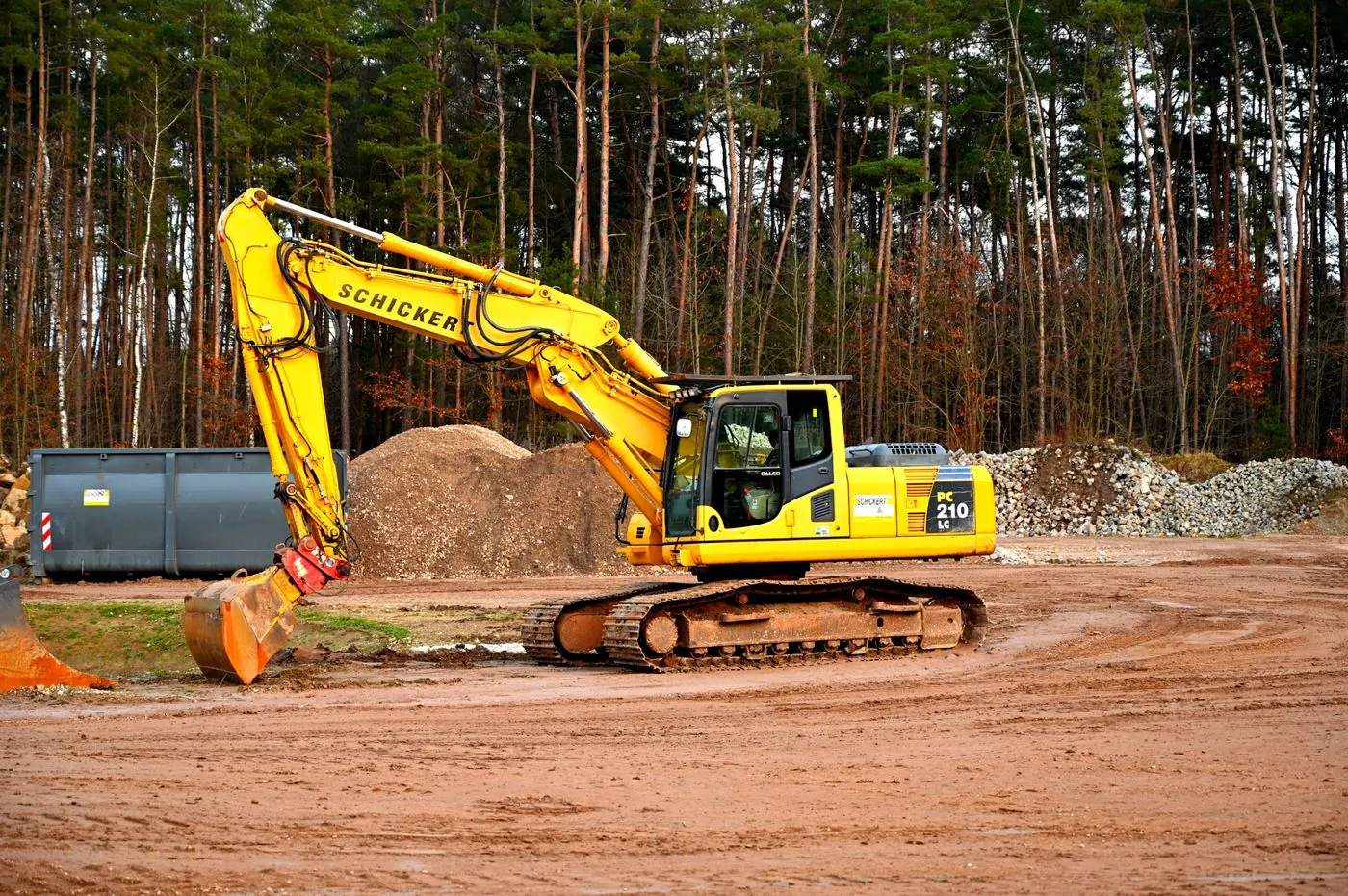
A crawler crane is a crane mounted on a pair of continuous tracks instead of wheels, which spreads its weight over a much larger ground contact area and eliminates the need for outriggers during a lift. This undercarriage design is what gives crawler cranes their defining advantage: they can lift at or near full rated capacity across their working range without repositioning outriggers or leveling the machine for each pick, and they can do it on ground that would be unsafe for a wheeled crane.
Because the tracks distribute load pressure so widely, crawler cranes handle soft, uneven, or previously disturbed ground, such as reclaimed land, backfilled excavation areas, or unpaved industrial sites, better than any mobile crane subtype. This makes them common on infrastructure projects, refineries, power plants, and heavy industrial builds where the crane needs to stay in one working area for an extended period and lift repeatedly without re-rigging.
The tradeoff is mobility. Crawler cranes move slowly under their own power, typically only within a site, and cannot travel on public roads. Relocating one between job sites requires partial or full disassembly, low-bed trailer transport for the base and counterweights, and a separate mobile crane or two to reassemble the boom and rigging on arrival. This mobilization process can take a full day or more depending on the crane’s size and the site’s access conditions, which is a major factor in project planning and cost.
Red Tiger’s fleet includes the Liebherr LTR1100, a 100-tonne crawler crane used on projects where ground conditions or duty-cycle lifting rule out a wheeled machine.
Mobile Crane vs Crawler Crane: Side-by-Side Comparison
The table below summarizes how the two crane types compare across the factors that matter most when planning a lift in the UAE.
| Factor | Mobile Crane | Crawler Crane |
|---|---|---|
| Mobility | Travels on public roads (all-terrain, truck-mounted); fast relocation between sites | Moves only within a site on tracks; requires disassembly and low-bed transport between sites |
| Setup time | Typically under an hour once on site, using hydraulic outriggers | Often half a day to a full day, including track assembly, counterweight fitting, and boom rigging |
| Capacity range | Roughly 8 to 500+ tonnes across UAE fleets, concentrated in the mid-to-high range | Commonly deployed at the higher end of the capacity range, with strong duty-cycle performance at full load |
| Ground conditions needed | Firm, load-bearing ground for outrigger spread; less suited to soft or uneven soil | Handles soft, uneven, or previously disturbed ground due to wide track footprint and low ground pressure |
| Typical UAE use cases | Building construction, MEP and steel erection, plant shutdowns, road-accessible sites | Refineries, power plants, marine and reclamation projects, long-duration heavy lifts, congested industrial yards |
| Relative cost | Lower mobilization cost; efficient for short-duration or single-day lifts | Higher mobilization cost due to transport and assembly; often more cost-effective for extended, repetitive heavy lifting |
No single row in this table should decide the crane on its own. A project with a heavy load but excellent road access and a short lift window might still call for a large all-terrain crane rather than paying for crawler mobilization. The decision framework below walks through how these factors interact.
How to Decide Which Crane Type Your Project Needs
Start with the load and the site, not with a preference for one crane category. The questions below, worked through in order, will point most UAE projects toward the right answer.
What does the ground actually support? If the lift area is firm, compacted, and accessible by road, a mobile crane is almost always the faster and more economical choice. If the ground is soft, recently backfilled, sandy without compaction, or otherwise unable to bear concentrated outrigger loads, a crawler crane’s wide track footprint becomes the safer, and often the only viable, option.
How heavy is the load, and how far does it need to travel from the crane’s center? Every crane, mobile or crawler, has a load chart that defines maximum capacity at a given radius and boom angle. A load near the top of a mobile crane’s chart at a short radius might still be within reach of a large all-terrain unit, while the same weight at a long radius might exceed what any mobile crane on the market can safely handle, pushing the project toward a crawler. For a full explanation of how these charts work, see what is a load chart and how to read one.
How long will the crane be on site, and how many lifts will it make? A single-day pick-and-place job almost always favors a mobile crane, since crawler mobilization costs and time are hard to justify for short work. A multi-week or multi-month project with repeated heavy lifts from a fixed position, common on process plants and marine works, often makes the higher upfront crawler mobilization cost worthwhile because the crane never needs to re-rig for each pick.
Does the crane need to move between multiple lift points on the same project? Mobile cranes handle this naturally since they can reposition in minutes. Crawler cranes can walk short distances under load in some configurations, but relocating across a large site still takes real time and planning.
What access does the site actually allow? Confined urban sites in Dubai or Abu Dhabi with limited road frontage often cannot accommodate a crawler’s transport and assembly footprint, which can tip the decision back toward a mobile crane even for a heavier lift, sometimes requiring a larger-tonnage mobile unit to compensate for a shorter working radius.
If the answers point in different directions, for example a heavy load on good ground but a tight schedule, it’s worth discussing the full lift plan with a crane provider before committing to a machine. Getting the tonnage decision wrong after mobilization is expensive on both crane types, and the guide on how to choose the right crane tonnage covers this in more depth.
Boom Length and Load Charts: The Basics
Every crane’s true lifting capacity is not a single number. It’s a range defined by boom length, boom angle, and the radius from the crane’s center to the load. As radius increases, either because the load sits farther from the crane or the boom extends longer, the maximum weight the crane can safely lift decreases. This relationship is documented in the crane’s load chart, which the operator and lift planner reference before every pick.
Mobile cranes generally offer telescoping main booms, often extendable with lattice jib attachments, which allows the same machine to cover a range of radius and height combinations without a full rig change. Crawler cranes more commonly use lattice boom sections that are pinned together on site, which take longer to configure but can be extended to very long lengths for tall or deep-reach lifts, such as tower crane erection or deep excavation work.
Neither crane type’s rated capacity, the tonnage in its name, represents what it can lift at every radius. A 500-tonne all-terrain crane cannot lift 500 tonnes at a 40-meter radius; its actual capacity at that distance will be a fraction of the nameplate figure. This is why tonnage alone is never a sufficient way to select a crane, and why an accurate lift plan always references the specific load chart for the boom configuration in use.
Capacity Ranges in UAE Rental Fleets
UAE mobile crane fleets typically span from around 8 tonnes, suitable for light MEP and precast work, up to 500 tonnes or more for heavy module lifts, tower crane assembly, and large steel structures. Within that range, the most frequently rented capacities tend to cluster in the 25 to 130 tonne band, which covers the bulk of general construction and plant maintenance lifting.
Crawler cranes in the region are generally reserved for projects where either the load itself exceeds what a mobile crane can safely handle at the required radius, or where ground conditions eliminate mobile options entirely. A 100-tonne crawler crane, like the Liebherr LTR1100 in Red Tiger’s fleet, occupies a capacity range that overlaps with mid-size mobile cranes, but it gets selected specifically for site conditions or duty-cycle requirements rather than tonnage alone.
For a full breakdown of the mobile crane subtypes available and their typical capacity bands, see mobile crane types explained, or browse current fleet availability on the equipment page.
Frequently Asked Questions
Is a crawler crane always more stable than a mobile crane?
Generally yes, when both are set up correctly. A crawler crane’s tracks distribute weight over a far larger footprint than a mobile crane’s outrigger pads, which lowers ground bearing pressure and reduces tipping risk on soft or uneven ground. A properly rigged mobile crane on firm, level ground with correctly extended outriggers is also stable within its rated chart, but it depends more heavily on ground preparation than a crawler does.
Can a mobile crane work without outriggers?
Most mobile cranes have a much lower “on-rubber” capacity rating for very light picks without outriggers deployed, but they cannot lift anywhere near their full rated capacity this way. Outriggers are required for any lift approaching the crane’s rated tonnage, which is one of the main practical differences from a crawler crane.
How long does it take to mobilize a crawler crane compared to a mobile crane?
A mobile crane can typically arrive, set up outriggers, and be ready to lift within an hour on a prepared site. A crawler crane usually needs to be transported in sections by low-bed trailer and reassembled with the help of an assist crane, a process that commonly takes several hours to a full day depending on the machine’s size and site access.
Which crane type costs less to rent for a short job?
For short-duration, single-day lifts, a mobile crane is almost always more cost-effective because it avoids the transport, assembly, and disassembly costs associated with a crawler crane. Crawler cranes tend to become cost-competitive only on longer projects where their mobilization cost is spread across many lifting days.
Do I need a crawler crane if my site has soft or sandy soil?
Not automatically. Soil can sometimes be improved with compacted aggregate pads or steel mats to safely support a mobile crane’s outriggers, depending on soil bearing capacity and load requirements. On genuinely poor or reclaimed ground, or where ground improvement isn’t practical, a crawler crane is usually the more reliable and often safer choice.
Conclusion
The mobile crane vs crawler crane decision isn’t about which machine is more capable in the abstract. It’s about matching a crane’s mobility, setup requirements, and load chart to your site’s actual ground conditions, schedule, and lift profile. Mobile cranes win on speed, road access, and cost efficiency for most road-accessible UAE projects. Crawler cranes win when ground conditions, extreme capacity, or extended duty-cycle lifting make stability the priority over mobility.
If you’re planning a lift and aren’t sure which crane category fits, contact Red Tiger Cranes to walk through your load, radius, and site access with a crane specialist before you book equipment.

Faizan Ahmed
Related Articles
All articles Blog
Blog Crane Rental for Ports and Logistics Operations in the UAE
Mobile crane rental for UAE ports and logistics: breakbulk cargo, warehouse installs, and free zone lifts that complement fixed port…
Read article Blog
Blog Daily vs Weekly vs Monthly Crane Rental Rates: Which Is Cheaper?
Compare daily, weekly, and monthly crane rental rates in the UAE, including mobilisation costs, to find the true cheapest option…
Read article Blog
Blog Crane and Rigging Support for Hospitality and Hotel Construction Projects
How hotel and resort builds in the UAE use crane rental for facade, MEP, pool, and waterfront lifts without slowing…
Read articleReady to Discuss Your Project?
Share your load, location and dates. Our team responds to every enquiry within 2 hours.