Blog
Which Industries Need Crane Rental in the UAE? A Sector-by-Sector Guide
A sector-by-sector guide to crane rental by industry UAE: construction, industrial, infrastructure, energy, hospitality, and logistics needs.
Six sectors drive most of the crane rental demand in the UAE: construction and high-rise development, industrial and manufacturing operations, infrastructure and roads, energy and utilities, hospitality and leisure, and ports, logistics, and transport. Each sector has a distinct lifting profile: different load types, different site constraints, and different compliance requirements. A mobile crane fleet that serves a Dubai high-rise site needs a different mix of capacity and reach than one supporting a substation shutdown in Abu Dhabi or a hotel renovation in Ras Al Khaimah.
This guide breaks down what each sector typically needs from a crane rental partner, the lift scenarios that come up most often, and the compliance points worth checking before a crane arrives on site.
Key Takeaways
– Construction and high-rise projects account for the bulk of UAE crane rental demand, driven by tower crane support, precast erection, and MEP lifts.
– Industrial and manufacturing sites need cranes for heavy machinery installation, plant shutdowns, and tight-clearance indoor lifts.
– Infrastructure, energy, hospitality, and logistics sectors each have narrower but recurring lift patterns, from bridge girders to rooftop chillers to container handling.
– Compliance credentials, OSHAD alignment, LEEA-trained riggers, Dubai Municipality approval, and Trakhees licensing, matter more in regulated sectors like energy, ports, and infrastructure.
– Matching crane class and crew certification to the sector reduces delays, rework, and safety incidents more than picking on price alone.
crane rental services overview
Construction & High-Rise: The Largest Source of Crane Rental Demand
Construction and high-rise development generates the steadiest volume of crane rental work in the UAE, and it’s the sector most people picture when they think of mobile crane hire. Dubai and Abu Dhabi’s skylines keep expanding, and every tower, villa community, and mixed-use development needs cranes at multiple stages, not just once.
Typical lift scenarios include tower crane erection and dismantling support, precast panel and facade installation, structural steel placement, MEP (mechanical, electrical, plumbing) equipment lifts into upper floors, and material handling during the finishing phase. Mobile cranes also step in for jobs a fixed tower crane can’t reach efficiently, like lifting a chiller onto a podium roof or placing a generator in a basement plant room.
Site constraints shape crane selection here more than almost anywhere else. Urban plots in Dubai often have tight access roads, adjacent live traffic, and limited laydown space, which pushes contractors toward all-terrain or crawler cranes with a smaller footprint but still enough reach and capacity for the lift radius required.
Compliance matters at every stage. Lift plans need sign-off from site safety teams, riggers should be LEEA-trained, and cranes operating near public roads or pedestrian areas typically require Dubai Municipality permits. For fast-moving projects, crane rental for high-rise construction projects in Dubai covers the planning details specific to vertical builds.
Construction & High-Rise sector page
Industrial & Manufacturing: Heavy Machinery and Shutdown Windows
Industrial and manufacturing facilities need cranes for a narrower but more technically demanding set of tasks: installing heavy machinery, replacing process equipment during planned shutdowns, and moving loads inside buildings where clearance is limited and downtime is expensive.
Common lift scenarios include setting production line equipment, lifting boilers or pressure vessels into place, installing overhead conveyor systems, and handling loads during factory commissioning or relocation. Many of these lifts happen inside existing structures, which means the crane has to work around roof trusses, existing equipment, and narrow doorways, often with tighter tolerances than an open construction site allows.
Plant shutdowns add time pressure. A factory that schedules a maintenance window expects the crane, crew, and rigging plan to be ready before the shutdown clock starts, because every extra hour of downtime carries a direct cost. This is where a rental provider’s planning discipline, pre-lift surveys, rigging studies, and equipment staging, matters as much as raw lifting capacity.
Compliance considerations include OSHAD alignment for facilities operating under Abu Dhabi’s occupational safety framework, documented lift plans for loads near process piping or live equipment, and rigging crews trained to LEEA standards for handling irregular or sensitive loads.
Industrial & Manufacturing sector page
Infrastructure & Roads: Bridges, Interchanges, and Utility Corridors
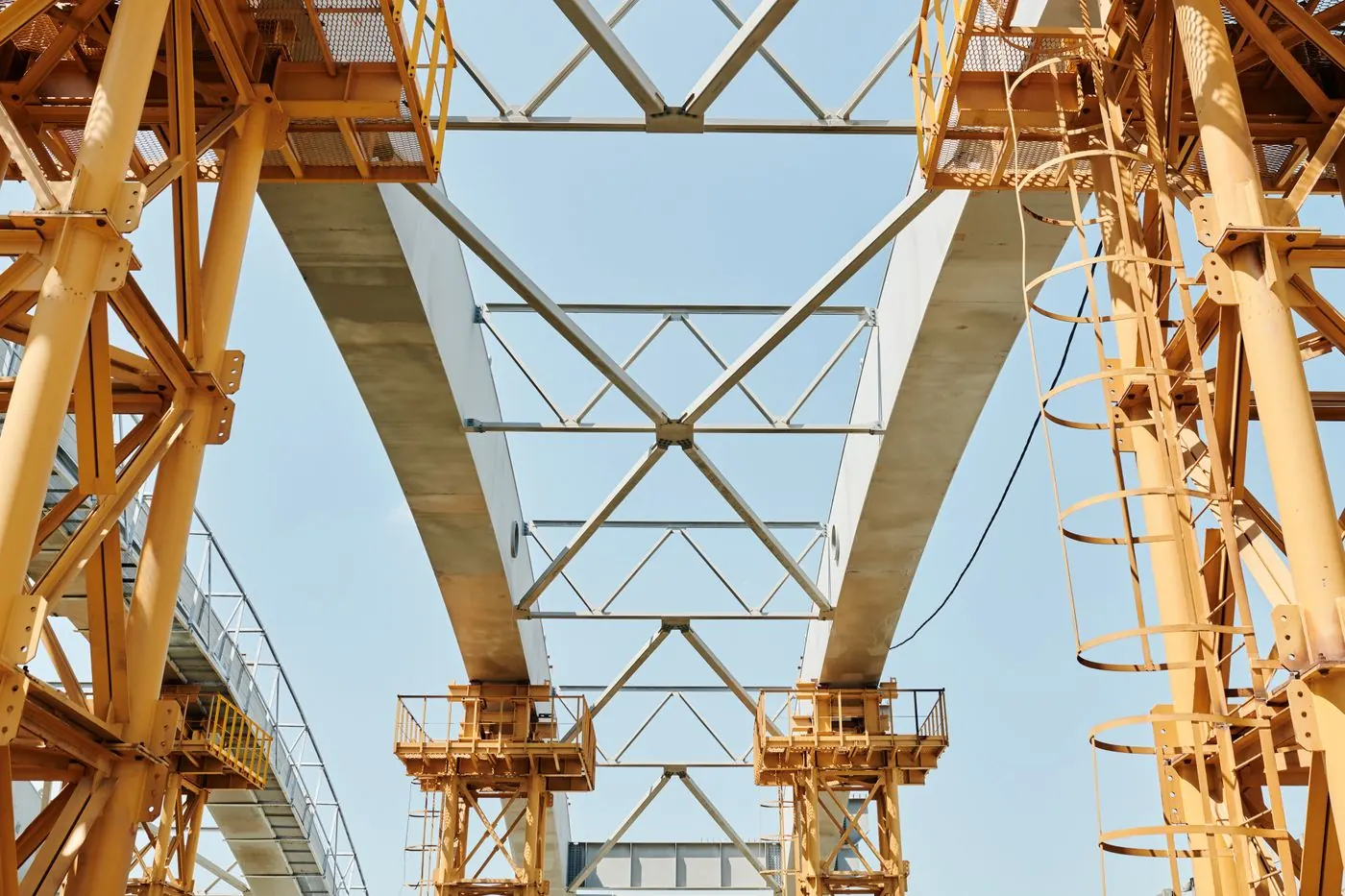
Infrastructure and road projects, highway interchanges, bridges, drainage networks, and utility corridors, call for cranes that can handle heavy, awkward loads over extended stretches of a project timeline, often in coordination with traffic management plans.
Typical lifts include placing precast bridge girders and box culverts, positioning box sections for underpasses, lifting piling rigs and drilling equipment into position, and handling large-diameter pipe sections for drainage or utility corridors. These jobs frequently happen in phases spread across months, with cranes mobilizing and demobilizing as the project moves along a road alignment.
Working near live traffic is the defining constraint for this sector. Lifts often need to happen during approved night windows or with lane closures coordinated through the relevant roads authority, and the crane’s ground-bearing setup has to account for uneven or unfinished terrain rather than a finished slab.
Compliance requirements typically include RTA or municipal road-closure permits, traffic management plans that account for the crane’s working radius, and ground-bearing capacity checks before outriggers are set on soil or sub-base material that hasn’t fully compacted.
Infrastructure & Roads sector page
Energy & Utilities: Regulated Sites With Zero Tolerance for Error
Energy and utilities work, power generation, substations, water treatment, and district cooling plants, comes with the tightest compliance environment of any sector on this list. Lifts happen around live electrical infrastructure, pressurized systems, or critical public utility assets, so there’s little room for error in planning or execution.
Common scenarios include lifting transformers and switchgear into substations, positioning generators and turbines, replacing pumps or valves at water and wastewater facilities, and supporting cable-pulling operations that need a crane to hold tension or position reels. Many of these lifts happen during scheduled outages, which puts the same time pressure on the crew as an industrial shutdown, but with added electrical safety protocols layered on top.
Cranes working near energized equipment need documented exclusion zones, and crews should be briefed on the facility’s permit-to-work system before mobilizing. Rigging near transformers or switchgear also demands attention to load balance, since this equipment is often top-heavy or has an irregular center of gravity.
Compliance touchpoints include OSHAD compliance for Abu Dhabi utility sites, facility-specific permit-to-work procedures, and LEEA-trained riggers who understand load geometry for electrical and mechanical plant equipment. For utilities that need a crane on short notice after an unplanned outage, crane rental for emergency and short-notice support outlines what a rapid-response mobilization looks like.
Energy & Utilities sector page
Hospitality & Leisure: Rooftop Equipment and Renovation Constraints
Hotels, resorts, and leisure developments need cranes for a mix of new-build construction and, more distinctively, renovation and equipment-replacement work on properties that stay operational during the lift. This is a sector where guest experience and site logistics matter as much as the lift itself.
Typical lift scenarios include placing rooftop chillers and cooling towers, installing kitchen and laundry equipment too large for standard elevators, replacing pool equipment or water-feature components, and supporting facade or signage installation on active hospitality properties. Beachfront and resort sites also bring unique access challenges, soft sand, landscaped grounds, and limited crane positioning options near guest areas.
Timing is often the biggest constraint. A resort mid-season may only allow lifts during specific hours to avoid disrupting guests, and a crane’s footprint has to be planned around pool decks, valet areas, and pedestrian paths that can’t simply be closed off the way a construction site can.
Compliance considerations include coordination with property management on access windows, noise and visual screening requirements in guest-facing areas, and standard rigging documentation for equipment lifts onto occupied rooftops.

Hospitality & Leisure sector page
Ports, Logistics & Transport: Container Handling and Heavy Cargo
Ports, freight yards, and transport facilities need cranes for tasks that overlap with, but aren’t identical to, dedicated port cranes: handling oversized cargo that doesn’t fit standard container-handling equipment, supporting warehouse and yard equipment installation, and assisting with breakbulk or project cargo that arrives outside normal container flow.
Common scenarios include lifting oversized machinery or modules off flatbed trailers, positioning warehouse racking and material-handling systems, loading and unloading abnormal cargo that exceeds standard crane or forklift capacity, and supporting yard reconfiguration projects. Mobile cranes often work alongside a facility’s fixed port cranes rather than replacing them, filling gaps for loads or locations the fixed equipment can’t reach.
Ground conditions and traffic flow are the main operational constraints. Ports and logistics yards run continuous vehicle movement, so a mobile crane’s working radius and setup time need to be planned to avoid blocking active lanes, and outrigger placement has to account for paved yard surfaces rated for heavy axle loads but not necessarily for concentrated crane point loads.
Compliance requirements typically include Trakhees licensing for operations within Dubai’s port and free zone jurisdictions, documented lift plans for oversized or abnormal cargo, and coordination with terminal operations teams on scheduling windows.
Ports, Logistics & Transport sector page
Choosing the Right Crane Partner for Your Sector
The common thread across all six sectors is that crane capacity alone doesn’t determine whether a lift goes smoothly. What matters more is whether the rental provider understands the sector’s specific compliance environment, has crews trained for that type of load, and can mobilize on the timeline the sector demands, whether that’s a multi-month bridge project or a four-hour utility outage window.
A provider that works across construction, industrial, infrastructure, energy, hospitality, and logistics sites builds a broader base of rigging experience than one focused on a single vertical, which translates into fewer surprises when a lift doesn’t match a standard template.
Frequently Asked Questions
Which industry uses the most crane rental services in the UAE?
Construction and high-rise development accounts for the largest share of demand, since towers, villa communities, and mixed-use projects need cranes across multiple phases, from structural steel through MEP installation and finishing.
Do different sectors need different crane types?
Yes. Urban construction sites often favor all-terrain or crawler cranes with a compact footprint, infrastructure projects need higher-capacity cranes for precast girders, and industrial or hospitality lifts frequently require precise, lower-capacity cranes that can work in confined spaces.
What compliance credentials should a crane rental company have in the UAE?
Look for OSHAD compliance, LEEA-trained riggers, Dubai Municipality approval for public road or urban work, and Trakhees licensing for port and free zone operations. Which credentials matter most depends on the sector and jurisdiction.
Can one crane rental provider serve multiple sectors, or should each industry hire a specialist?
A provider with cross-sector experience, construction, industrial, infrastructure, energy, hospitality, and logistics, typically brings broader rigging and compliance knowledge than a single-sector specialist, which helps on projects that combine elements of more than one sector.
How far in advance should a company book crane rental for a sector-specific project?
Planned work like construction phases or scheduled plant shutdowns should be booked as early as the lift plan is finalized, often weeks ahead. For unplanned needs, such as a utility outage or equipment failure, providers with rapid-response capacity can mobilize on short notice.
Get Sector-Specific Crane Support
Whatever sector your project sits in, the right crane rental partner should already understand its compliance requirements and common lift scenarios before the first mobilization call. contact the team to discuss the equipment and crew certifications your project needs.
Red Tiger Cranes has supported mobile crane and heavy-lifting operations across the UAE’s seven emirates since 2008, working with OSHAD-compliant, LEEA-trained crews on projects spanning all six sectors covered in this guide.

Faizan Ahmed
Related Articles
All articles Blog
Blog Crane Rental for Ports and Logistics Operations in the UAE
Mobile crane rental for UAE ports and logistics: breakbulk cargo, warehouse installs, and free zone lifts that complement fixed port…
Read article Blog
Blog Daily vs Weekly vs Monthly Crane Rental Rates: Which Is Cheaper?
Compare daily, weekly, and monthly crane rental rates in the UAE, including mobilisation costs, to find the true cheapest option…
Read article Blog
Blog Crane and Rigging Support for Hospitality and Hotel Construction Projects
How hotel and resort builds in the UAE use crane rental for facade, MEP, pool, and waterfront lifts without slowing…
Read articleReady to Discuss Your Project?
Share your load, location and dates. Our team responds to every enquiry within 2 hours.